
Mobitrack - Blog
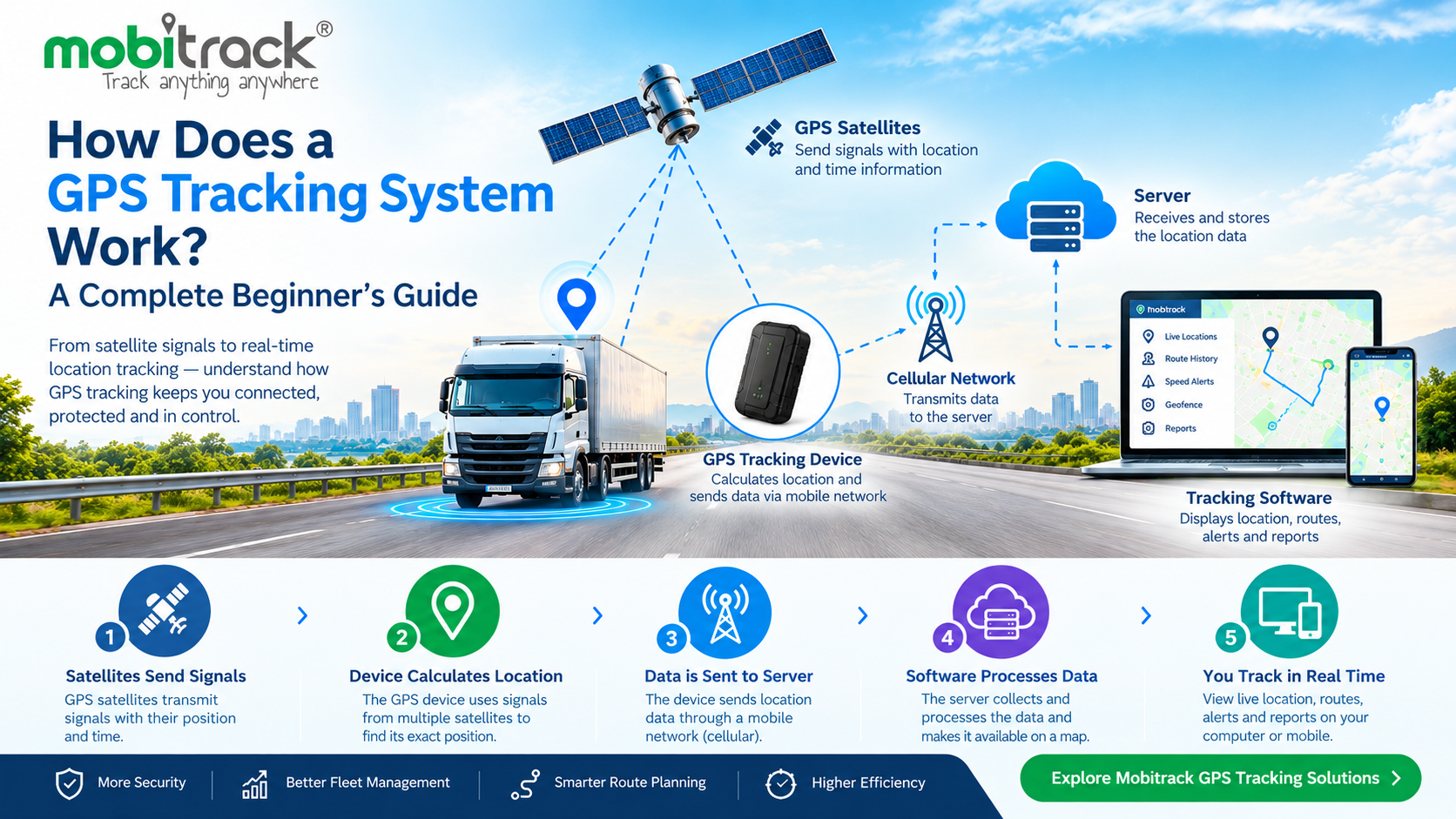
How Does a GPS Tracking System Work? A Complete Beginner’s Guide
GPS Tracking System helps businesses understand vehicle movements and manage daily transportation activities more efficiently. For beginners, GPS tracking may sound technical, but the process is easy to understand. In this guide, Mobitrack explains how GPS tracking works, its essential components, and why it is useful for modern businesses.
What Is a GPS Tracking System?
A GPS tracking system is a technology that determines location of a vehicle or asset using signals from satellites. When connected to a communication network and tracking platform, it allows authorised users to view location information remotely.
For example, a delivery company can use a vehicle tracking system to check vehicle locations, review completed journeys, and coordinate deliveries. Depending on the solution, users may also access speed information, route history, geofencing alerts, and fleet reports.
How Does a GPS Tracking System Work?
A GPS tracking system follows a series of steps to convert satellite signals into useful location information.
1. The Device Calculates Its Location
The GPS tracker processes the received signals to calculate its geographical position, usually expressed as latitude and longitude.
2. Location Data Is Transmitted
The frequency of updates depends on the device settings, connectivity, and tracking service.
3. Software Displays Vehicle Information
Users can access the information through supported computers or mobile devices. This makes it easier for businesses to monitor operations from a central location.
Read More: GPS Tracking Software: Why It’s a Must for Every Modern Fleet
What Are the Main Components of GPS Tracking?
A GPS tracking system generally includes four essential components:
GPS satellites: Provide the signals used to calculate geographical positions.
Tracking software: Displays locations, routes, alerts, and reports.
These components work together to makes remote vehicle monitoring possible.
Benefits of Using a GPS Tracking System
Better vehicle visibility: Businesses can check reported vehicle locations and coordinate daily activities more effectively.
Improved fleet management: Fleet managers can review routes, understand vehicle usage, and organise transportation schedules.
Route planning: Historical journey information can help identify frequently used routes and improve future planning.
Enhanced security: Location updates and geofencing alerts can help users monitor vehicle movements and identify unexpected activity.
Who Can Use a GPS Tracking System?
Businesses can select features according to their fleet size, operational requirements, budget, and connectivity needs.
Choose Mobitrack for Smarter Vehicle Monitoring
Understanding how GPS tracking works is the first step towards improving vehicle visibility and managing transportation more effectively. By combining satellite positioning, communication networks, and tracking software, businesses can access useful information about vehicle movements and journey history.
Mobitrack helps businesses explore GPS tracking and vehicle monitoring solutions suited to their operational needs.
Frequently Asked Questions
1. How does GPS tracking system work in Normal terms?
A GPS tracker receives satellite signals to calculate its location and sends that information through a communication network to tracking software, where authorised users can view it on a map.
2. Does GPS tracking require an internet connection?
However, remote monitoring generally requires a communication method, such as a cellular network, to transmit location data.
3. Can a GPS tracker show a vehicle’s live location?
Many tracking systems provide near-real-time updates. The frequency of updates depends on device settings, satellite reception, and network availability.
4. Is GPS useful for small businesses?
Yes. Small businesses can use GPS tracking to monitor vehicles, review journeys, coordinate deliveries, and improve operational visibility.
5. What should I check before choosing a GPS tracking system?
Consider location update frequency, coverage, reporting features, geofencing, installation requirements, subscription costs, and customer support before selecting a solution.